What will keep users in your product?
Your product saves them work or helps them decide.
Leaving means moving a whole group and not just writing code.
Bundles, lost discounts and migration work make it expensive to go.
All three can keep the payment. Only some of them mean the customer prefers you.
The more apps I build with AI, the fewer reasons I find to use someone else's.
I now use my own tools for finances, habits, learning German, storing photos, analysing documents and so on. I built all of them with AI.
Now we see the rise of REA (Reverse Engineer Anything) and everybody is trying to come up with the plan with how to cope with its consequences.
In my opinion this single-person software is a much harder competitor for modern software companies. I will start with why I prefer to build my own tools and finish with why users could still stay.
I only need the part I use
A product for thousands or millions of users has to handle everybody's rules and preferences. That's not necessary for me.

A product for many users
What it also has to handle
A tool for one user
What it never has to handle
The rules live in the code so there is no rule editor to build.
In my habit tracker the share that each habit adds to the day's progress is a fixed number in the code. If I want to change it, I edit the code instead of building a settings screen.
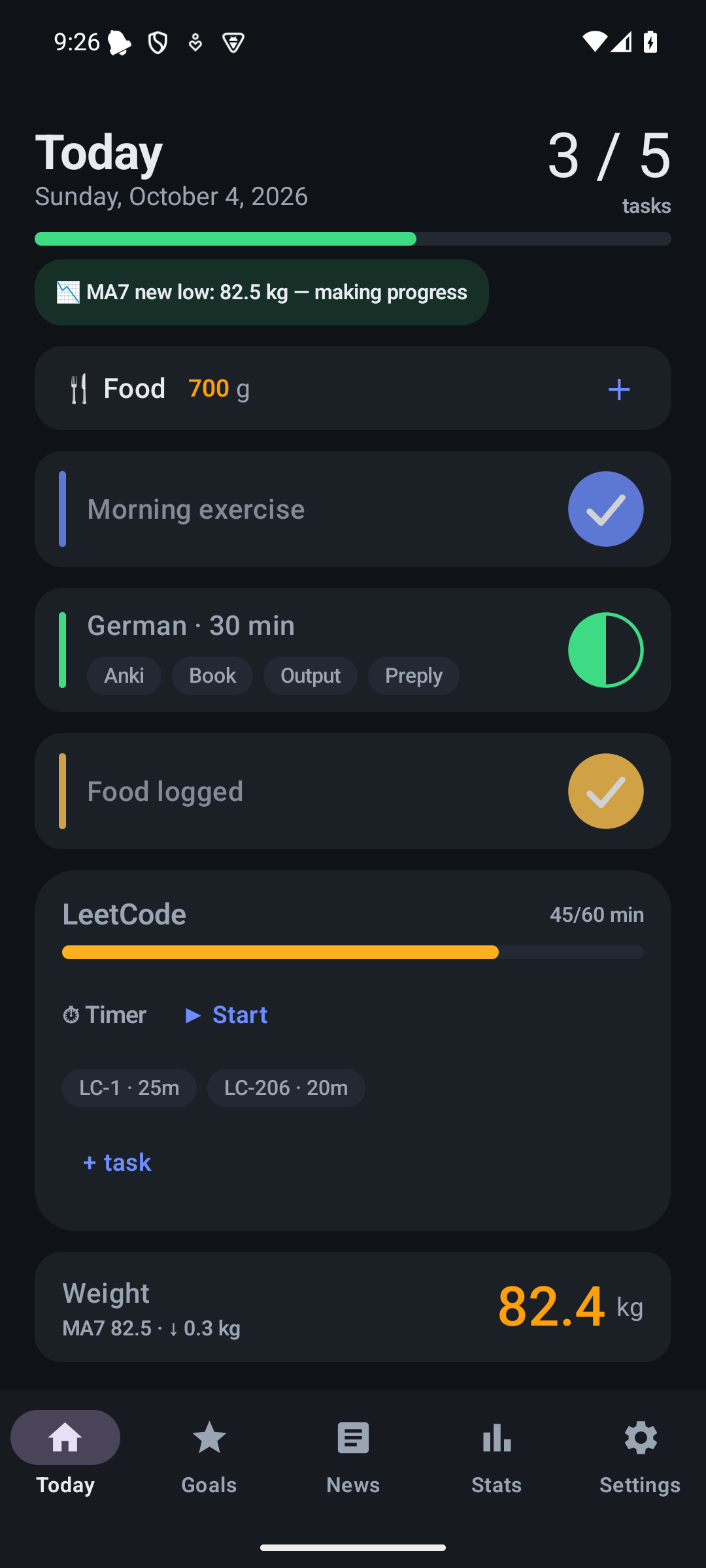
Vendor data suggests that most features of a product are rarely used. In my experience only a subpercent share of the users use each of those and still you need to maintain and build them to avoid a shitstorm. At the same time I only need mine.
To stop needing your product I only have to rebuild the part of it that I use. AI makes that small job cheap, but it would not make rebuilding your whole product small.
Less code gives me less to check
The best code is the code that doesn't exist.
I only need the dates for this year.
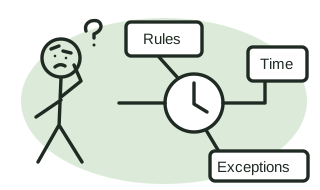
This obviously needs a scheduling engine.
Or I can store the dates once.
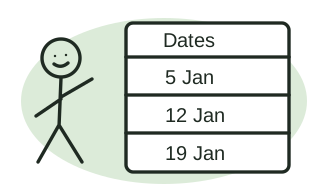
My advanced scheduling engine is now a list.
Not much should be explained here, I guess. But I will try to cover a couple of examples.
I don't need to have a complicated rule set with dates for my habit tracker. I can ask AI to generate the table upfront for a year ahead and avoid building a scheduling engine for that.
The same goes for most of what a product for thousands of people has to handle. A card is declined on the day of renewal. Somebody forgets a password and needs to reset it. A couple of colleagues share a workspace and one of them must not see the other's notes. Somebody always changes a setting that nobody tested together with the others.
Everything in such a product depends on everything else. After a change a developer can easily forget to test some distant function and it breaks.
I avoid most of those problems because my tools have one user and fixed rules.
If the logic is small enough, tests or an audit can explore every possible state. Such a check covers my rules and not the browser or the database underneath. I am aiming for something like that and it is one more reason to keep my logic small.
What building it myself costs
Besides the subscription I pay with time, either learning how your product works or describing how mine should work.
Most of the cost of software comes after it works. Maintenance is usually estimated at half of the lifetime cost or more. For my own tools the expensive part comes every time an API changes or an OS update breaks something.
AI lowers my costs too, but you still spread development and maintenance across thousands of customers and I cannot. What I have instead is knowing exactly what I need. That lets me ignore everything else.
If checking and maintaining my version ends up costing more than using yours, then the ready-made product wins.
You could lose a purchase before I sign up
I have merged these tools into a single platform that knows everything about me and that makes it extremely powerful.
Imagine a new weekly planner that already knows my goals from my German tool, my budget and the documents I stored instead of putting me through yet another onboarding form.
The next need could be met without a sign-up
Try a weekly planner
Extend the personal system
Your churn could look fine while fewer people enter the product. They might add the function to their personal system before they try yours. You would never see them leave because they never arrived.
Quite a lot of people already build things for themselves. Software was the hard case because it needed a programmer. AI removes that for small tools.
Hold on to your interface
If all I get from you is an API, you are a commodity to me.
Your interface is where customers discover another function and decide what to buy next. You see what they look at and what they skip and you can adjust.
If my personal system becomes that place instead, you may still get paid for each request. But only my system decides what to compare and what to buy next. You would see the transactions and much less of the process that led to them.
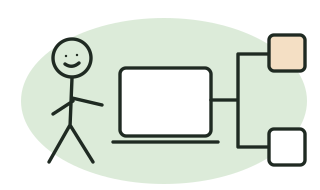
Where people choose decides what you can charge
They choose in your interface
The whole experience can support a premium.
Their personal system chooses
A premium needs something nobody else can offer.
If three suppliers can translate the same page, my system can pick the cheapest one every time. It never sees the rest of your product so the rest cannot justify your price.
Airlines faced this long before AI. A seat is the same whether you book it on the airline's site or through a travel agent's booking system. Lufthansa Group said that selling through those systems cost it several times more than selling on its own site. So it added a charge of 16 euro to tickets sold through those systems and none to tickets sold on its own sites. The seat had not changed but who controlled the place where people chose it had.
What happened to the bookings
The charge applied from September 2015. Travel Weekly reported in March 2016 that the group's chief executive, Carsten Spohr, said Lufthansa had lost some bookings outside its home market but that the higher charges made up for them. The same report quoted the Guild of Travel Management Companies saying that Lufthansa's market share between the UK and Germany fell by eight percentage points in the last quarter of 2015. Both are claims by interested parties about one airline in one period. They say nothing about software but they do show that whoever owns the interface can steer where a purchase happens and what it costs.
An API can still earn a premium when it offers something nobody else has, such as exclusive data. The risk is greatest when your product is interchangeable and someone else's screen decides which supplier gets the order.
One personal system could become another lock-in
If my history, my rules and my logins are locked inside one platform, it could be harder to replace than the apps it replaced.
Owning the source code would not solve this. I would need to test whether another implementation can reproduce the results I depend on. Exporting files alone is not that test.
Social networks show that portability is something you design. On Mastodon your followers can follow you to a new server, but your posts stay. On Bluesky an account keeps its identity and its data when it moves to another server. I want my personal system to be built like Bluesky. I know that is easier said than done.
What could make users stay and accept your price?
I see five ways to keep a customer. Some make the product worth choosing, some rely on the other people in it and others make leaving expensive. The same product can use all of them. A sixth part is about measuring whether any of this works.
Sell what code cannot get
Almost any function can be rebuilt now. With AI I can check a VAT number against the EU's free register and match payments against a bank statement in an afternoon. If your invoicing tool does only that, I do not need it.
What AI cannot write for me is permission. To take card payments I need a payment provider that holds a licence from a regulator. My code can call that provider but it cannot become one. A card network, a marketplace and an app store also decide who gets in.
The other thing code cannot give me is someone who pays for a mistake. If my own tool gets a tax calculation wrong, the fine is mine. A self-employed tax adviser in Germany must be insured against the damage their advice causes. When I pay one, I am buying that promise as much as the calculation. A software product can sell the same promise only if its supplier is ready to pay when the result is wrong.
So I would pay for the part that needs a licence, a contract or a guarantee and not for the part that needs code. I suspect this moves money from the products that do the work to the ones that hold the permission.
Help them decide
You see what worked for thousands of people while I only see myself. If that knowledge improves my next decision, your screen offers more than the same buttons.
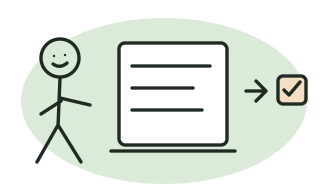
Good advice needs what you know and what only they know
What your product may learn
Which choices helped thousands of other people
What failed in similar tasks
What a personal system may know
Thirty minutes a day for German
Limits from other parts of their life
Share the relevant personal context with permission
But my own system knows things you never see, such as the thirty minutes a day I have set aside for German. If I share that with you, your advice gets better. I also need a way to see and correct what you assumed about me. What matters is that the advice helps me reach my goal and does not just keep me in your app longer.
Better recommendations raised listening
Better recommendations changed what people listened to
Podcast streams per user. Recommendations popular with people like you equal 100.
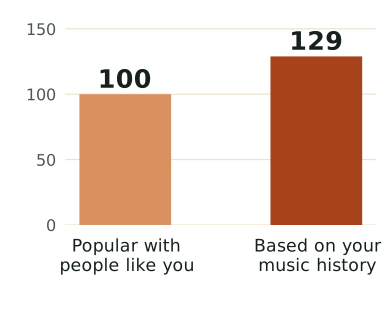
A Spotify experiment with about 850 thousand users found that personalised podcast recommendations raised listening by roughly 29 percent. The effect faded when the recommendations changed. Nobody measured whether anyone kept paying.
Be where their people are
Exporting my contact list does not move the people on it. A personal system can rebuild your screen, but it cannot rebuild the colleagues who review my work or the customers who respond to it.
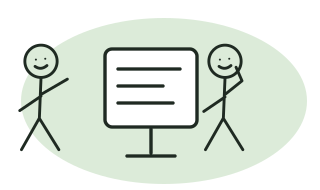
I can rebuild your screen but not the people who use it
The other people in a product give someone a reason to stay. They can also leave that person unable to move alone.
Those relationships can protect your price. They can also keep people in a product they dislike. The protection holds only while the group cannot leave together.
If your product can talk to other products, people depend on you less. And if a whole team can move at once, the other people in your product stop being a reason to stay.
Sell a bundle that works as one
A bundle can save work if billing, payment matching and reminders share the same records. Replacing one of them is then less attractive than keeping the whole.
A person may also keep the bundle only because removing one part loses a discount. Selling each part separately makes that clearer. It may also reduce the revenue the bundle protects. Regulators look at bundles that exist only to hold customers in. A bundle whose parts share records is easier to defend.
If personal systems make narrow functions easier to replace, suppliers may respond with broader bundles. People could end up with fewer steps passed between tools and fewer independent alternatives at the same time.
Notice when leaving is the only reason they stay
Proprietary workflows, bans on outside apps and exports nobody can use can all protect payments without improving the product.
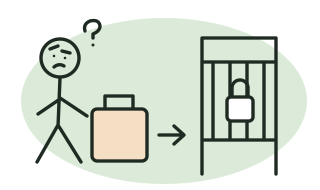
Wanting to leave and being able to leave are different
A better fit or a lower price
Rebuild workflows, check records and regain access
The old product has not necessarily improved
A useful export lowers part of that cost but it does not move the other people or restore permissions.
The customer pays for that through migration work and reduced control. Those restrictions also offer little protection against a personal system that never needed your network or your data.
Measure what you want to keep
A lower churn rate can hide unused subscriptions and more screen time can mean the task takes too many steps.
I would start with one job that customers now do themselves and change it so they have less work. Then I would compare a group that got the change with a group that did not, looking at who signs up, who finishes the task, who renews and what is left after the direct costs. The people who decline the offer have to be counted too. This is only a plan and I have not run it.
What happens after the demo works
But of course I am a software engineer. I enjoy building things and it takes much less time for me to create an app than for a newbie. I am probably an exception today, but I do not expect that the situation will stay so for long.
A demo is easy to build now. What is hard is living with a tool that works and still contains mistakes you cannot see.
This is not new because businesses have run on spreadsheets for decades and most of the audited ones contained errors. People kept using them because a tool that works most of the time is still worth having.
What matters is what an unseen mistake costs. In my habit tracker a wrong streak costs me nothing, but in an invoice the same kind of mistake costs money and sometimes a customer.
I expect useful personal tools to get easier for more people. I would change my mind if people kept abandoning their tools, if maintenance took most of the effort or if sharing context between tools rarely helped.
If your users can rebuild the parts they need, they will still pay you for the part they cannot or do not want to do themselves. They will also pay for the part where their own mistake would cost more than your price.
So which part of your product will they not rebuild and is it worth your price?